


Skip to content
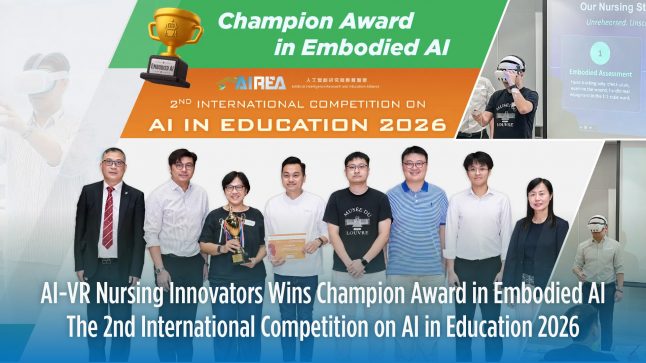
Empowering Confident Clinical Communication using AI-Enhanced VR Simulation January 6, 2026 Posted in: TALIC Featured Story

Effective clinical handovers are vital for seamless patient care and strong teamwork in healthcare. 

To build essential skills, competence and confidence, Nursing students benefit greatly from realistic, interactive practice. The AI-Enhanced Virtual Reality Simulation System in Nursing practice, co-created by the innovative team led by Dr. Maggie Chan*, Dr. Benney Wong, Mr. Abraham Wan at the School of Nursing, and Dr. Carson Hung and Mr. Ziv Tai at TALIC, were designed to prepare nursing students for professional nursing communications through cutting edge simulation technology.

Read the full story on TALIC

AI is Transforming Education Design December 12, 2025 Posted in: TALIC Featured Story

The landscape of educational technology is fast evolving in the age of Artificial Intelligence, invigorating the emergent trend of human-AI collaboration in instructional design. The human-AI collaborative approach leverages AI’s capabilities to supplement instructor productivity and creativity, transforming how teachers and instructional designers create and curate contents in the intelligent immersive learning environment.

Artificial intelligence is well suited to address teachers’ diverse needs by supporting individual students’ learning progress, delivering timely feedback on students’ work, gaining insights from student analytics to enhance interactivity, as well as generating content tailored to specific learning contexts and scenarios to improve students’ learning experiences (Wen et al., 2025).  

Read the full story on TALIC

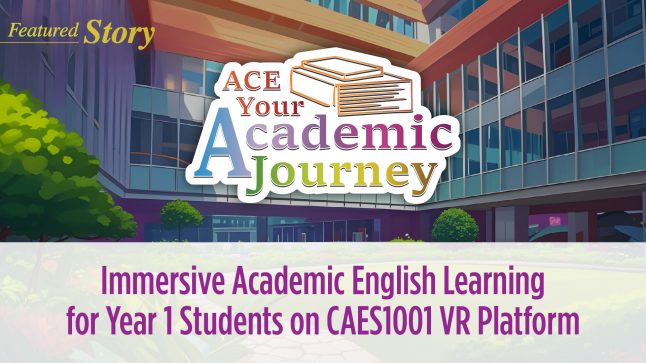
Immersive Academic English Learning for Year 1 Students on CAES1001 VR Platform September 22, 2025 Posted in: TALIC Featured Story

HKU’s CAES1001 virtual reality (VR) platform offers interactive learning by seamlessly connecting CAES, HKUL, and TALIC materials to engage students in self-learning and build academic literacies through digital innovation.

CAES1001 VR Platform

Interactive learning on a VR platform to familiarize new students with CAES resources

CAES1001, a first-year Academic English course, is working with the University of HongKong Libraries (HKUL) and the Teaching and Learning Innovation Centre (TALIC) to launch a virtual reality (VR) self-learning platform. This innovative project aims to enhance learning for first-year undergraduates by offering engaging and interactive experiences. Through the platform, students can develop essential skills such as writing, speaking, digital, visual, and AI literacy, with resources tailored to HKU’s diverse student community. 

Read the full story on TALIC

Examples of How Colleagues at HKU Integrate AI and Manage Associated Risks August 11, 2025 Posted in: TALIC Featured Story


In the 2024 to 2025 academic year, many HKU teachers have integrated some form of generative AI technology and learning activities in their classrooms. On the one hand, teachers are proactively exploring ways to harness the benefits of GenAI technology; on the other hand, teachers seek ways to manage the ethical challenges the technology presents.

AI Ethics Video Series

TALIC invited colleagues in the T&L community to share and show examples of how they integrate AI technology and manage associated risks in a series of videos.
https://video.teli.hku.hk/ai-ethics/ai_brian_v06.mp4

Stay tuned for the next episode of the AI Ethics Video Series!

Read the full story on TALIC

Empower Postgraduates: An Innovative, Inclusive Online Course to Bridge Sociology Gaps July 14, 2025 Posted in: TALIC Featured Story

Welcome to Sociology for Postgraduate Students is a pre-sessional online course launched by HKU’s Department of Sociology in collaboration with TALIC. It aims to empower incoming postgraduate students, especially those without prior backgrounds in sociology, by bridging their knowledge gaps. The course engages students through expert-led videos, visual storytelling, and interactive discussions and fieldwork, familiarizing them with postgraduate teaching methods and activities. 

Read the full story on TALIC