


Skip to content
Online Learning to Elevate Campus Events with Safety Mastery May 13, 2026 Posted in: TALIC Featured Story

To support student societies in organizing safe, responsible, and respectful student-led activities, CEDARS-LEAF collaborates with TALIC to launch a new online learning course, SAFE2601 Health, Safety, and Conduct for Student-Led Activities Organizers. The course will equip student leaders and committee members of student-led activities in approximately 140 registered student organizations, including faculty and academic societies, residential halls and colleges students’ associations, cultural and sports clubs, with practical knowledge for planning and running campus activities with a strong foundation in legal compliance, risk awareness, and duty of care for a holistic leadership.

Read the full story on TALIC

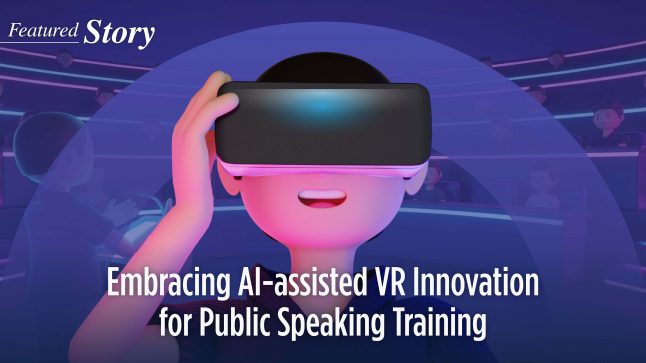
Embracing AI-assisted VR Innovation for Public Speaking Training February 6, 2026 Posted in: TALIC Featured Story

In large university classes, it is quite common for students, particularly those who are naturally shy, to remain quiet and refrain from active participation. Many of these students experience anxiety when it comes to delivering speeches or presentations to a large audience, often feeling overwhelmed by the dynamic and intimidating atmosphere of the lecture hall. Despite these challenges, mastering oral communication and presentation skills is a key competency for university students today. These abilities are not only essential soft skills but are also highly sought after in the professional world, particularly for new graduates stepping into the workforce. 

Read the full story on TALIC

Plan Master AI – A GPS for Lesson Design January 22, 2026 Posted in: TALIC Featured Story

A common challenge for pre-service teachers is the difficulty of integrating theory into practice, often resulting in discrepancies between their instructional ideas and actual classroom outcomes. Many pre-service teachers (PSTs) find themselves being “over-ambitious” setting objectives that are too difficult without providing appropriate scaffolding for their students. 

“Plan Master AI acts like a “GPS for Lesson Design”: while the teacher remains the driver of the classroom, the AI provides a reliable map that flags missed turns in logic and ensures the “educational vehicle” is properly equipped to reach every student, regardless of the terrain.” Prof. Elizabeth Loh from the Faculty of Education.

Read the full story on TALIC

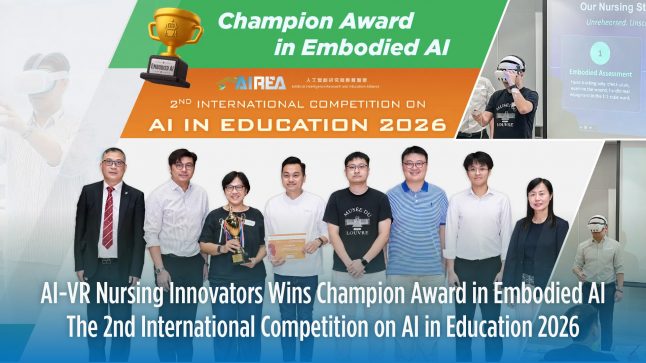
Empowering Confident Clinical Communication using AI-Enhanced VR Simulation January 6, 2026 Posted in: TALIC Featured Story

Effective clinical handovers are vital for seamless patient care and strong teamwork in healthcare. 

To build essential skills, competence and confidence, Nursing students benefit greatly from realistic, interactive practice. The AI-Enhanced Virtual Reality Simulation System in Nursing practice, co-created by the innovative team led by Dr. Maggie Chan*, Dr. Benney Wong, Mr. Abraham Wan at the School of Nursing, and Dr. Carson Hung and Mr. Ziv Tai at TALIC, were designed to prepare nursing students for professional nursing communications through cutting edge simulation technology.

Read the full story on TALIC

AI is Transforming Education Design December 12, 2025 Posted in: TALIC Featured Story

The landscape of educational technology is fast evolving in the age of Artificial Intelligence, invigorating the emergent trend of human-AI collaboration in instructional design. The human-AI collaborative approach leverages AI’s capabilities to supplement instructor productivity and creativity, transforming how teachers and instructional designers create and curate contents in the intelligent immersive learning environment.

Artificial intelligence is well suited to address teachers’ diverse needs by supporting individual students’ learning progress, delivering timely feedback on students’ work, gaining insights from student analytics to enhance interactivity, as well as generating content tailored to specific learning contexts and scenarios to improve students’ learning experiences (Wen et al., 2025).  

Read the full story on TALIC